Turning Business Vision into Daily Execution
Turning Business Vision into Daily Execution
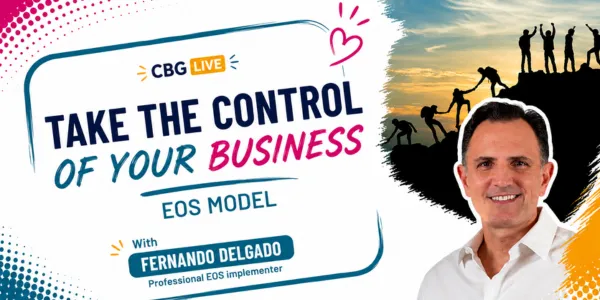
With Fernando Delgado
Most businesses know where they want to go. The real challenge? Getting everyone in the building to understand the destination, know their role, and actually deliver on their commitments.
That was the focus of Fernando's session on the Entrepreneurial Operating System (EOS). Developed by entrepreneur Gino Wickman and popularized in his book Traction, EOS helps companies build clarity, improve accountability, and execute strategy consistently. Hundreds of thousands of organizations use it today across tech, manufacturing, childcare, and professional services.
The system centers on six core components: vision, people, data, issues, process, and traction.
Core values and long-term targets
Vision comes first.
A company needs total clarity on where it is heading, why it exists, and what it stands for. EOS uses a tool called the Vision/Traction Organiser to help leaders answer fundamental questions about core values, purpose, niche, and strategy.
Values aren't just decorative wall art, Fernando pointed out. They should dictate who gets hired, who gets promoted, and who needs to be let go. The same goes for the company's core focus. Beyond profits, what is the underlying cause or passion that drives the team?
From there, leadership sets five-year, three-year, and one-year targets, working backward to figure out the necessary steps. But floating ideas mean nothing without execution.
"Vision without traction is hallucination," Fernando noted.
A compelling future means very little if the organization lacks the discipline to execute against it.
Getting the right people in the right seats
The second component is people.
Instead of focusing strictly on talent or experience, EOS pushes managers to ask two distinct questions: Is this person right for the organization? And are they right for this specific role?
Someone can share all your core values and still be in the wrong job. Conversely, a high performer might turn out to be a toxic influence on company culture.
Fernando highlighted an EOS filter for this called GWC: gets it, wants it, and has capacity. Does the employee understand the role? Do they actually want to do it? Do they have the time, skills, and training to succeed?
These questions give leaders an objective way to evaluate performance, moving away from decisions based on gut instinct or personal relationships.
Tracking the numbers that actually matter
Data forms the third component.
EOS replaces gut feelings with real numbers tracked on a weekly scorecard. The goal isn't to build a massive, overwhelming spreadsheet. Leaders just need 5 to 15 key indicators to get an accurate pulse on business health.
Fernando stressed the difference between leading and lagging indicators. Revenue is a lagging indicator; it tells you what already happened. Activities like sales leads, client meetings, or conversion rates are leading indicators. They offer an early signal for where the business is heading.
When people own specific metrics, performance becomes objective. Nobody has to guess whether someone seems to be doing well. The data tells the story.
Identifying and solving root causes
Every business runs into problems. The real issue is what happens after they appear.
Fernando warned against cultures where staff stop reporting issues because they assume leadership won't fix them anyway.
EOS tackles this with an issues list and a method called IDS: Identify, Discuss, Solve. The point isn't just to talk about a problem. Teams must dig down to the root cause, discuss solutions without defensiveness or office politics, and set actionable steps.
Who owns the fix? What are they doing about it? When is it due?
That accountability turns meeting chatter into actual progress.
Documenting core processes
The fifth component focuses on process.
As a company scales, vital knowledge often stays trapped inside employees' heads. If someone leaves, their ways of working walk out the door with them.
EOS urges businesses to document their primary operations. But don't write huge manuals nobody will read. Just capture the 20% of the process that yields 80% of the results.
Aim for consistency, not complexity.
Once recorded, these processes can be stored centrally, updated, and followed by anyone who needs them. That keeps the business running smoothly without relying entirely on specific individuals.
Setting quarterly priorities
Traction brings everything down to execution.
This relies on rocks, which are the three to five critical priorities a company must complete over a 90-day period. The limit is deliberate. If everything is a priority, nothing is.
A team might want to tackle 20 projects, but they have to narrow it down. What absolutely must get done over the next 90 days to move toward annual and long-term goals?
Those key items become the rocks.
Teams review progress constantly. Fernando calls this living in a 90-day world. It gives people enough time to complete significant work while forcing the company to pause, reassess, and reset priorities every quarter.
Meeting weekly with the Level 10 format
The Level 10 meeting is one of the practical tools in the system.
It runs on a strict structure: same day, same time, same agenda, every single week.
The meeting opens with good news, then moves through the scorecard, rocks, headlines, and to-dos. The bulk of the time goes straight to IDS, tackling the specific roadblocks holding the business back.
Before wrapping up, the team confirms action items, plans internal communications, and rates the meeting from 1 to 10.
It isn't just another meeting for the sake of having meetings. It creates a predictable operating rhythm so leadership always knows what is happening and what is off track.
These meetings shouldn't stay stuck at the executive level, either. Fernando advised rolling the same structure out across sales, operations, and other individual departments.
Structure creates momentum
The main takeaway from the session was that EOS isn't about discovering a secret formula.
Values, metrics, problem-solving, documented processes, and quarterly goals are familiar concepts on their own. The real power comes from combining them into one consistent operating system.
If a business feels bogged down by endless demands, unclear roles, or constant firefighting, working harder isn't the answer. Building better structure is.
Start small. Get clear on the vision. Put the right people in the right seats. Pick metrics that actually matter. Solve issues systematically. Document essential processes, and stick to a 90-day rhythm of focused priorities and real accountability.
Perfection isn't required. As Fernando put it, the goal isn't 100% perfection. It is getting the organization to a point where the system works well enough to deliver clarity, consistency, and traction.